
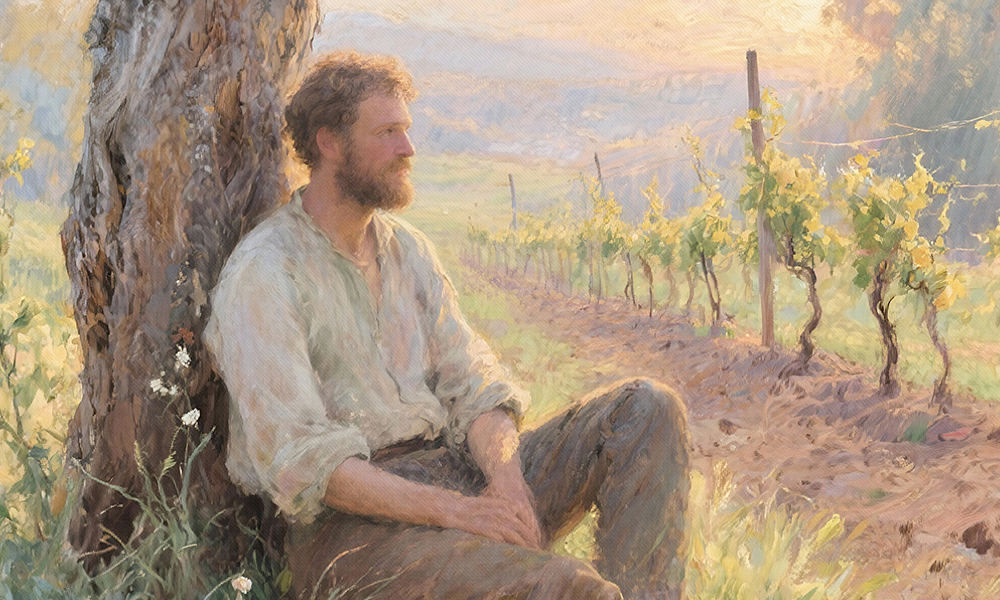

The January auctions are offering, in an eclectic mix, works representing the fluctuating artistic responses to the ideas of landscape, leisure, and cultural imagination. Winslow Homer’s A Mountain Climber Resting forms part of the artistic manifestation of the explorations and reflections that took place in American artistic circles in the latter part of the 19th century. While Winslow Homer began his career illustrating the American Civil War, he soon took up illustrating such depictions of leisure that had become accessible by an expanded transportation network.
The artwork “A Mountain Climber Resting” shows a lone mountain climber sitting after a strenuous climb, lost in the beauty before him. The point is obviously one of balance between strength and the ability to notice. This is strikingly close to a related artwork at the Cooper Hewitt Smithsonian Design Museum, exemplifying the painstaking way in which Homer would take his studies and complete them as paintings. The background of this artwork is also noteworthy, having originally belonged to Millicent Rogers, the heiress to Standard Oil, who would eventually go on to found the Millicent Rogers Museum in Taos, an area that is presently her residence.
The painting has since passed through distinguished hands and is now being offered by international trade lawyer Max Berry. It is part of a larger consignment of 20th-century art, Judaica art, and Chinese art to be sold in a Christie’s sale. These auctions, continuing in 2026, indicate a market interest in art works well-rooted in history and offering a balance between art and provenance.
Landscapes, Material Transformation, and Market Momentum
A contrasting yet complementary exploration of landscape is found in the work of Otobong Nkanga, whose tapestry The Pursuit of Bling: The Transformation examines human interaction with the Earth’s materials. Nkanga’s practice traces the journey of natural resources from extraction to consumption. In this series, mica, an element extracted from various continents, is traced as the material finds application in the production of cosmetics, electronics, and goods in the industries.
Also presently exhibited is another edition of this series at the Musée d’Art Moderne in Paris, which highlights increased institutional recognition for this artist. Nkanga’s market performance has also gained momentum. A related work from the same series achieved (including fees) at Christie’s London in June, far exceeding its pre-sale estimate. This result positioned Nkanga as one of the strongest recent entrants into the contemporary auction market.
There is also a lithograph by Claes Oldenburg available at auction in January, this one of a three-way electrical plug. Oldenburg is very famous for creating large sculptures out of everyday objects. Collaborations with Coosje Van Bruggen resulted in works that debunked conventional ideas of scale as well as domestic symbolism. Probably one of the most recognizable sculptures by this artist is a giant shuttlecock at the Nelson-Atkins Museum of Art for playing badminton.
This lithograph forms part of the Hechinger Collection, compiled by hardware tycoon John Hechinger and June Ross Hechinger. Such a collection signifies their interest in tools and other functional items as a subject in artworks When considered together, these highlights of the January auctions demonstrate that the landscape, whether it is literal or metaphorical, is a spur to artwork production.