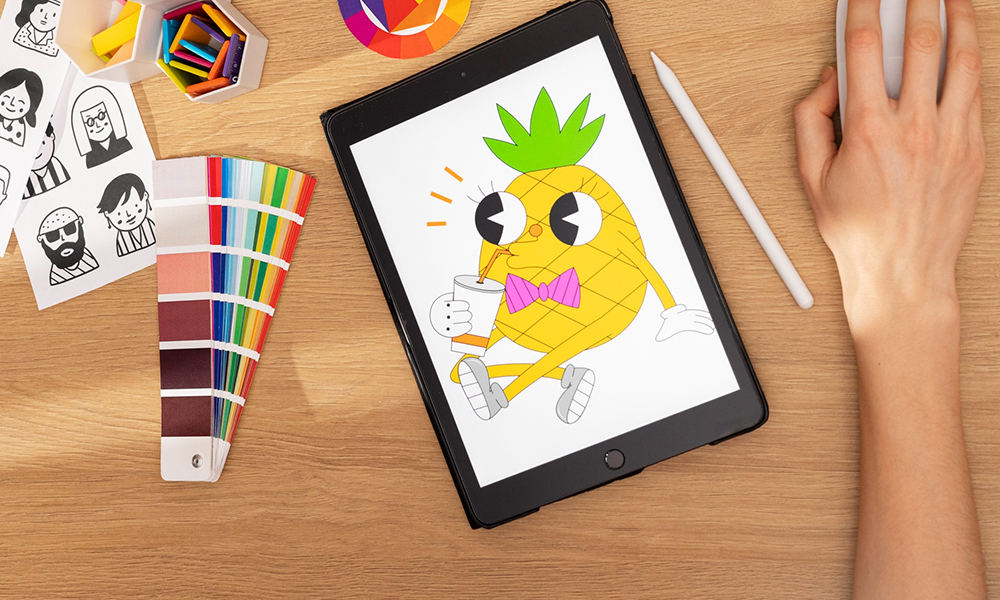

Artists now utilize tablets and technology for immediate world creation. Using pixels, there are no limitations to experimentation.
Tools for beginning artists have become available for rapid accomplishment with applications like Procreate, turning an iPad into a studio. Digital artists create colourful images with their fingers, plus they have unlimited undo options.
Professional artists have managed to utilize the AI generators in a creative way. By using basic text prompts, Midjourney can generate an infinite number of strange landscapes. Neural networks have the ability to create new forms of art, such as the dynamic swirls of Van Gogh with cyberpunk.
The potential of such a form of creativity will soon be on display in London, in gallery shows such as the Tate Modern, where the artwork will pulsate with code. At these gallery shows, it will be possible to change the color of the artwork via an app while observing it.
How Digital Tools Amplify Creativity in Everyday Life?
Software breaks traditional barriers decisively. Blender models 3D sculptures free of charge. Animators rig characters smoothly, exporting to VR realms. Costs plummet, allowing indie creators to compete with studios.
Collaboration thrives online seamlessly. Figma unites teams across continents. Designers share canvases live, iterating logos together. Feedback loops accelerate, turning ideas into polished art overnight.
Social media amplifies reach exponentially. Instagram Reels feature timelapse creations captivating millions. TikTok artists tutorialize techniques, inspiring copycats worldwide. Virality fuels motivation, sparking creative chains.
Education embraces digital methods eagerly. Schools teach Adobe Suite early, nurturing young talents. Online courses on Skillshare guide novices through Photoshop mastery. Skills compound, fostering lifelong innovators.
Challenges persist, yet solutions emerge. Digital fatigue prompts hybrid approaches. Artists print canvases for tactile finishes, merging pixels with pigment. Backups safeguard against crashes, preserving genius.
Sustainability gains traction too. Digital workflows slash paper waste dramatically. Cloud rendering reduces hardware needs, cutting energy footprints. Eco-conscious creators lead the charge toward green art.
Businesses adopt digital art strategically. Brands commission generative logos adapting to trends. Advertising evolves with AR filters overlaying products on faces. Engagement soars, proving art’s commercial muscle.
Digital art stands as modern creativity’s ultimate tool. It accelerates ideas, connects communities, and scales ambitions. Embrace it—your next masterpiece awaits a single click.
Read More: Art and technology shows in London and Los Angeles, a restored 17th-century cosmic atlas