

Postmodernism was a reaction to modernism. The postmodernist movement rejected the concept of grand narratives and universal meanings. Artists and philosophers rejected universal meanings.
The postmodernist movement impacted literature, art, architecture, and philosophy. Writers started experimenting with narrative fragmentation. Artists turned to irony and pastiche. Architects rejected strict functionalism. These changes reflected broader cultural skepticism.
The expert frames Postmodernism as a critical attitude. The approach values plurality over singular truth. The theory resists stable interpretation. This stance invites continuous questioning.
Readers often find Postmodern texts demanding. The language disrupts linear logic. The structure resists closure. This difficulty reflects the movement’s core principles.
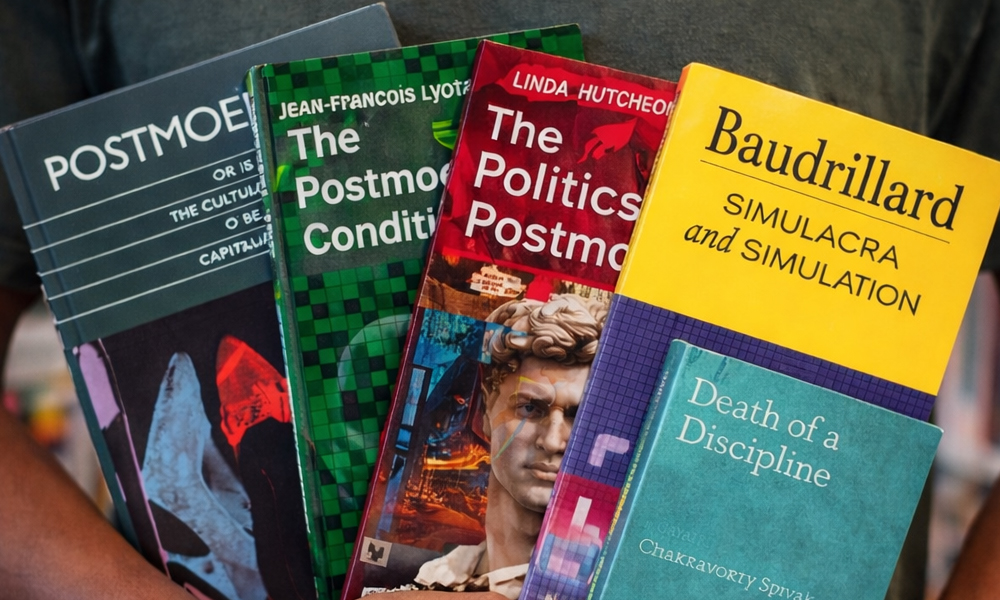
The guide introduces five essential books on the movement. Each book offers a distinct entry point. The selection balances theory and practice. This range supports diverse learning paths.
Five Key Readings on Postmodern Thought
The first book explains foundational concepts clearly. The author outlines the critique of modernist progress. The text situates Postmodernism within historical context. This grounding supports basic understanding.
The second book focuses on cultural theory. The analysis addresses media and simulation. The work examines how images shape reality. This perspective clarifies contemporary visual culture.
The third book explores Postmodern literature. The study analyzes narrative play and metafiction. The examples illustrate textual experimentation. This focus supports literary readers.
The fourth book examines architecture and space. The author critiques rigid modernist design. The discussion highlights symbolic and historical reference. This angle broadens interdisciplinary insight.
The fifth book reflects on power and knowledge. The text addresses discourse and identity. The analysis reveals how language shapes meaning. This theme connects theory to social life.
The guide emphasizes the value of careful reading. The expert encourages slow engagement. The texts reward patient attention. This method deepens comprehension.
The books support critical thinking skills. Readers learn to question authority. Readers learn to recognize constructed meaning. This training remains relevant today.
The guide connects theory to everyday experience. Postmodern ideas appear in media culture. Advertising uses irony and remix. Digital platforms amplify fragmented narratives.
Students and general readers benefit from this curated list. The selection reduces entry barriers. The commentary provides context and clarity. This structure supports confident exploration.
Postmodernism remains influential in contemporary debate. The movement shapes how people read culture. The books offer tools for interpretation. This guidance strengthens cultural literacy.
The expert frames reading as an ongoing practice. Understanding develops through comparison. Insight grows through reflection. This process reflects the movement’s open-ended spirit.