
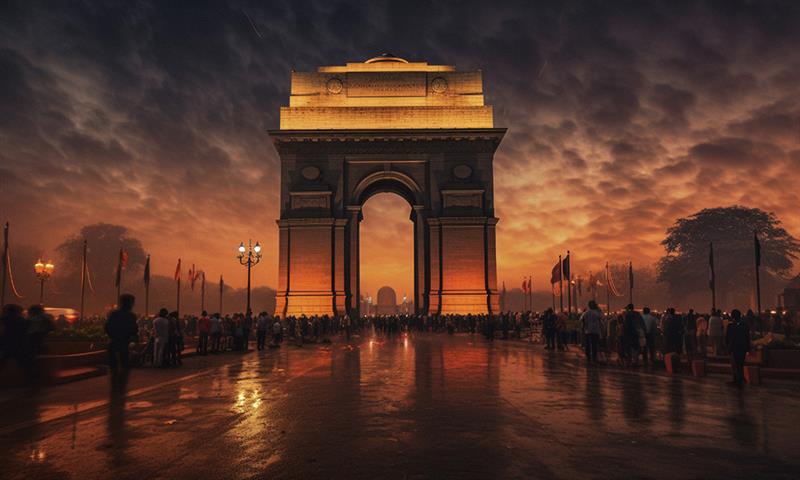

A significant moment is being marked in India’s contemporary art landscape with the announcement of Ai Weiwei’s first solo exhibition in the country. This exhibit has been announced to be inaugurated in the city of New Delhi and has been recognized as being important in providing the people of India exposure to a specific exhibit centered on this individual artist. This has been identified as an important event in the country in line with its cultural exchange implications for India.
The work and style of Ai Weiwei are often equated with political commentary and a material arts-related exploration. Not only has his work been exhibited in Europe, America, and in a great part of East Asia, but India has never been exposed to a solo show of his work till date. The lacuna in terms of engagement of a wider Indian populace with him is soon to come to an end as New Delhi would finally host his work, thus again being a pointer to the location’s stature in terms of world arts and aesthetics.
The exhibit is expected to display pieces of art that depict Ai Weiwei’s lifelong focus on issues concerning liberty, identity, displacement, and state power. The pieces of art on exhibit may not be entirely specified. However, there is an indication of diverse art pieces from varied fields. There is likely an involvement of sculptures, installations, and conceptual pieces of art.
India’s history of association with political art gives us an even more intriguing background to the exhibition. This focus on social commentary and protest has defined the history of artistic expression in the region; in doing so, it creates an opportunity for the dialogue of common experiences between the history of India and the global issues raised by Ai in the exhibition to be established.
Global Visibility, Cultural Exchange, and Contemporary Relevance
New Delhi is going to host the exhibition, which stands indicative of its fast-growing cultural infrastructure. In due course, galleries and museums have turned the capital into a hub for international artists. The exhibition would hence signal greater momentum, strengthening India’s bonding within global exhibition circuits and reinforcing the cross-cultural artistic exchange.
This exhibition has depended more than most on institutional collaboration. Accessibility and contextual understanding have formed the backbone of curatorial planning. Efforts are being made to present Ai Weiwei’s work with historical and political clarity so that diverse audiences can access and meaningfully engage in its themes.
The public’s interest in the exhibit has already been established with regards to the artist’s and artworks’ reputation for social and political activities and interventions. The media coverage helps to establish the importance of both the event and the exhibits themselves. Therefore, there are expectations that the exhibits will interest people across different sections of culture, academia, and social movements.
The exhibition is also reflective of the wider trends evident in India’s contemporary art world. For one, there is an increased move towards involving international bodies, and the public has been opened up to an understanding of international practices, breaking away from conventional limits.
In conclusion, Ai Weiwei’s first solo exhibit in India is more significant than simply marking an important exhibit in Ai Weiwei’s exhibit record. It signifies India’s position in the world art world and underscores the need and importance of mutual dialogue and discussion. In choosing New Delhi as the venue of his first solo exhibit in India, there is an opportunity created for an imperative state of critical reflection and engagement.