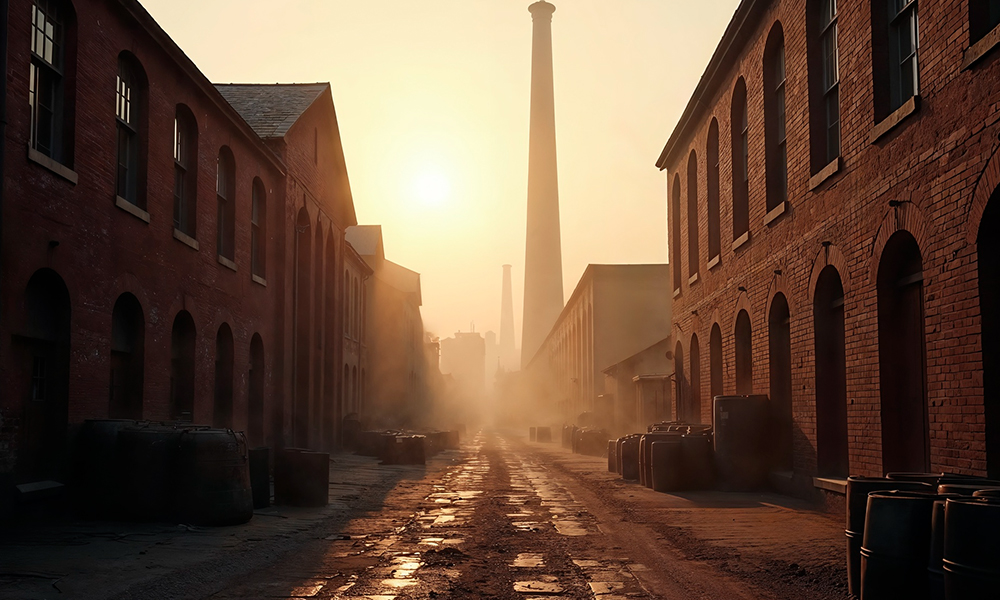

Across the nation, many old industries, mills, warehouses, and rail yards which served as the focal point of heavy industry in various municipalities. At one time, they were places of employment for thousands of people generating a great deal of noise. As heavy industries have changed their focus, or in some cases have retooled themselves through new technology.
Some of these old places have been forgotten about for so long (most do not even exist anymore), that they are totally ignored as places of historical importance. Therefore, we have much historical information and evidence related to each of these old sites that has not yet been collected and made public.
The focus of the Industrial Heritage Readiness Initiative (IHR Initiative) is to revitalize long neglected buildings throughout North America. Therefore, this initiative is focused on restoring buildings back to their historic and identity information. By helping people reconnect with their history through revitalization of industrial heritage sites.
To restore areas of industrial heritage is about far more than saving old brick and mortar structures. To preserve areas of industrial heritage is a means to honour the memories of the many people whose hard work made those structures possible and facilitated the continued economic growth of our cities.
Once restored, these historic places gain value as functional locations; often they will be repurposed as museum exhibits, art galleries, community or cultural hubs. Some will serve as cafes, libraries or educational institutions. This allows them to remain relevant and not lost to time, but instead co-exist with everyday activities.
Communities Reclaim Spaces
The success of industrial heritage projects depends on local community involvement. To ensure the success of preserving historical places within the community, cooperation between local residents, historians, and local government entities must occur. The amount of time spent working on a project during this period increases the individual’s sense of ownership toward the landmark.
Community-based collaboration and cooperation foster the development of collaborative projects within cities, located in or near a restored historic site to enhance their economies. Tourists can create itineraries based on visiting restored sites; restored historic site due to the opportunities produced from the restoration work put into place.
The third benefit of community-based projects is education. The creation of public spaces on restored landmarks provides schools and universities with a “living classroom” where they can provide their students with a hands-on learning environment.
Additionally, projects that restore old structures contribute to the preservation of the environment by reusing existing resources, thereby reducing the need to build new buildings and producing much less waste by demolishing old structures.
Ultimately, industrial heritage initiatives create a link between the past and the present. Progress does not necessarily mean that history will be lost. In fact, sites that were once neglected can be renovated and become current, useful places while also maintaining their histories.