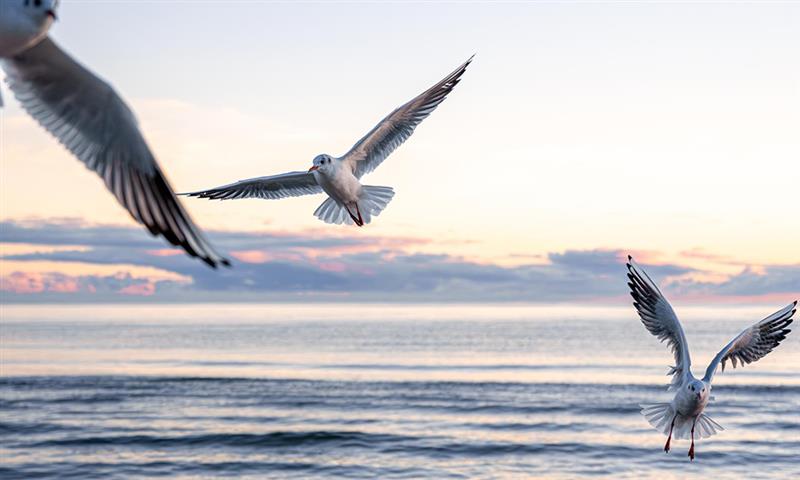

In the silent language of animation cartoons, action may express more than words. A Bird Learns to Trust the Wind is a tale of conversation—but of motion, of rhythm, of emotion. It explores a very simple but powerful idea: learning to let go of control and thus to trust in forces other than the self. In the travel of a single bird, the animation reflects growth, fear, and surrender.
Each movement feels measured in, hesitant, and restrained. The wings beat with care, never releasing into the air at any moment. This hesitance is but a mirror to possibly one very universal experience-the fear of falling, failing, or losing one’s balance. The tension in this would be expressed in subtle pauses, bumpy motion, close framing that depicts uncertainty.
The wind, though, can be said to be amorphous, intangible, and palpable all at once. It is an entity which cannot be viewed but felt instead. The wind within the story represents change, unpredictability, as well as elements which are uncontrollable and come from the outside world. The bird initially fights the wind and opposes its forces and movements. This struggle generated an inequality, which revealed the implication that to resist means to become exhausted, not secured.
As the animation continues to run, there is an evident transition between the actions performed by the bird. There is a transition from stiffness, from restricting its wings, from struggling to overcome the wind, to relaxing its wings, relaxing its body, and enabling it to start responding to the wind. Trust cannot be built within an instant. It is built through time.
Space is used well in the animation. The wide skies and open shots convey freedom, while the tight shots convey fear and doubts. The contrasting emotions conveyed through confinement and freedom in the visuals successfully reinforce the emotional journey experienced by the bird. Finally, when the bird feels free to fly with the wind, there is breath in the animation, as there is an emotion of relief.
Sound and silence are also important. Ambient sounds, fan caress, and moments of silence instead of music increase the emotional value. These moments of silence allow the audience to reflect on them and relate to the feelings of the bird. The absence of a speaking narrator also ensures that the tale is universal.
In the symbolic analysis, the transformation of the bird generally passes the boundaries of nature. It symbolizes the transformation of humanity itself. It is able to utilize the power of the forces of change, to be ready to deal with the uncertainties of life, to realize the reality that not every aspect of life needs to be controlled. The ability to trust the wind symbolizes the ability to trust life, not to give up when the time comes to move, when the time comes to be stationary, when the time comes to flow.
The animated film refuses to arrive at dramatic conclusions. There is no victory, no destination to reach. Only a flowing conclusion. The bird is still flying. It is because it has become adept enough to fly in it.
A Bird Learns to Trust the Wind is, at its heart, a consideration of balance. It’s a reminder that sometimes strength is not found through resistance. Rather, it’s a reminder that sometimes strength is found through listening, through adapting, through being moved. The soft animation conveys a journey that could be the simplest act of flight into a consideration of trust, freedom, and the process of becoming.