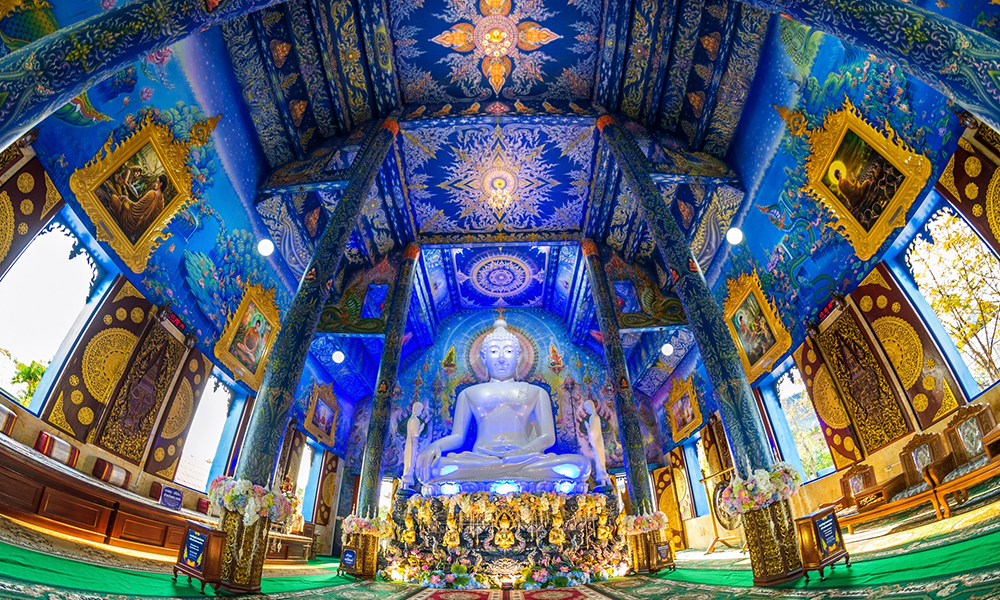

The wall art at the temples has long been a major factor in the religious space, quietly contributing to the spiritual experience of people who visit the temples. It is ornamentation because the wall art at the temples represents the visual vocabulary of balance and devotion. When people move along the people corridors, it is where they move away from all their worldly attractions.
These artworks can represent the gods, stories, or symbolic designs that have been passed down from the previous generations. Each of these characters, actions, and signs holds meaning based on spiritual philosophies. The placement of these picture scenarios on the sides of the temples is done to achieve a smooth flow of visual elements rather than a congested visual environment.
The aspect of the temple wall paintings and sculptures that is most impressive is the skill involved in their execution. It requires a number of years for the ancient craftsmen to learn the skills needed in stone sculptures and painting. The craftsmen spend their time devoted to their work and the skill in terms of their deep devotion and spiritual belief.
Craftsmanship is an important element in the making of wall arts in temples. Years of learning are required in order for artists to develop skills that have been handed down from generation to generation. Whether carvings done in stone, frescoes, or relief sculptures, the work is an expression of patience combined with religious concentration. Many artists perceive working on temples as a service to their religion, not a job. They carry out their tasks with an emphasis on respect for their traditions than on speeding through their work.
Colors and shapes are used judiciously in wall paintings inside temples. Earthly colors, nature colors, and properly composed paintings can be noticed. The use of these colors and shapes is supposed to calm the soul, not agitate it. Soft red, soft blue, yellow, and rock colors blend well to ensure an environment of composure. The tempo of paintings through patterns and symmetrical images emphasizes this fact.
The paintings on temple walls are similar to temple architecture. The paintings are intended to interact with columns, ceilings, and doorways at temples. In this manner, they become an intrinsic part of architectural construction. Therefore, an integrated setting is created with temple paintings and temple architecture to complement each other. This uniformity enhances the religious aspect to make an entire temple.
Temple wall paintings were a source of inspiration for modern artists and designers. The integration of traditional artworks from temples is seen with a twist in meditation rooms, culture halls, and even modern homes. The objective of utilizing this form of art has not changed despite the materials evolving; this is to create a place where people can relax and be in harmony.
Color is another vital consideration in the wall arts of the temple walls. The colors used are often based on natural pigments, giving rise to nature-friendly shades. The colors are selected in order to create a sense of balance rather than brightness. The walls are designed in shades of muted reds, muted blue, beige, or yellow, among others, in an effort to create a peaceful background rather than one that attracts the eye.
The artwork that is displayed on the walls of the Temple adds to the linkage between artwork and architecture. In this context, the artwork aims at complementing the pillars and the architecture found in the building. In fact, this can be attributed to the desire to feel oneness with the entire structure. This further emphasizes the indulgence in the sense of harmony in the environment. In this context, the artwork blends in with the spiritual part of the Temple.