
The Giacometti influence is recognized by his long figures and preoccupation with the presence of human beings. However, this unique style is also mixed with another subtle and personal influence: home. Landscape and local culture were an important factor in the evolution of Giacometti’s artistic style, making it unique yet universal.
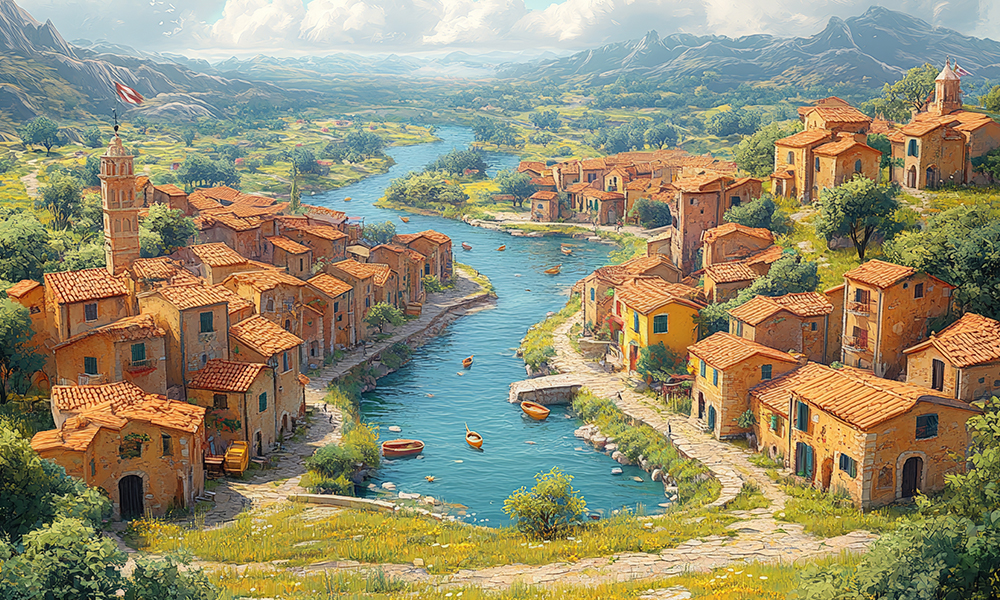
Giacometti was born in a small village in Switzerland, where he was surrounded by mountains, valleys, and a small village community. This had a great influence on his early concepts of space and form. The contrast between the large natural environment and the small village culture later influenced his sculptures, where lone figures are observed suspended in large space.
Although Giacometti later relocated to Paris, his sense of home was always very strong. These occasions were more a time for contemplation than a necessity for escape. The familiar rhythms of village life allowed him to cultivate his powers of observation and also reinforced his patience and attention to detail.
Landscape, Memory, and the Human Figure
Landscape was an inspiration for Giacometti, although not as subject matter to be painted, but as a way of understanding the world. The figures of Giacometti appear elongated and fragile, representing the presence of humanity in the vastness of the world. The artist’s sense of proportion and distance was affected by the narrow paths, distant horizons, and small interior spaces of the landscape.
The locals were also a very important part of Giacometti’s artistic process. Giacometti’s models were often family, friends, and acquaintances. Giacometti did not idealize but instead decided to represent the same faces again and again, in an attempt to capture presence rather than likeness.
His Paris atelier maintained this approach to work. It served as a private and very personal space. Giacometti continually worked over surfaces, scraping away and rebuilding. This practice expressed his conviction that comprehension comes through repetition and close attention.
The impact of home influenced his avoidance of spectacle. Rather than emphasizing abstraction and radical experimentation, Giacometti concentrated on subtlety and quiet power. Country simplicity reinforced his preoccupation with the essential: the body, the face, the act of looking.
In Drawn to Home, Giacometti’s experience illustrates how a place can shape artistic identity in a subtle manner. Nature and culture did not confine his vision; they expanded it. Giacometti’s gift for keeping in touch with his roots allowed him to create a personal artistic language that overcame geography, showing that modern art can have its roots in memory and homeland.